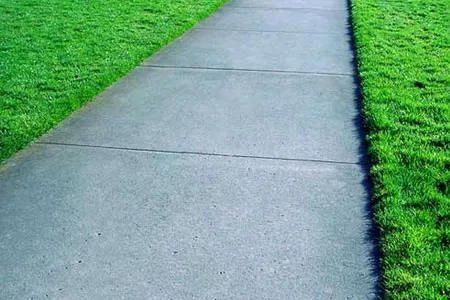
A new slab can look alarming in its first months and still be fine. It can also have real faults. Here is how to tell them apart in a hot, humid, rainy climate, and what to do when the contractor will not deal with it.
Why is my new concrete cracking already? Is the contractor responsible for a crack that appears weeks later?
Fresh concrete shrinks as it loses water, and fine cracks are the usual result. Joints are meant to hide them. Whether the contractor is responsible turns on the cause and on your contract. Hairline shrinkage is normally not counted as a defect. A crack you can slide a coin into, a crack with a step, or a random crack on a slab with no joints suggests a problem with base, joints or timing. Photograph it with a date and write to the contractor.
Why is my new slab dark and light in patches?
Blotchy, dark and light areas on new concrete are nearly always about moisture. Parts in shade or over wetter ground dry slowly and stay dark. Our humid air stretches that out for weeks. Separate truckloads, water added on site and overworked spots also shade differently. Give it two to three months. What is left after that is usually permanent and only cosmetic.
It rained on my fresh concrete. Is it ruined?
Not necessarily. When it rains on fresh concrete before the surface has set, the top can be washed weak, pitted or dusty. Rain that arrives after finishing and initial set does little harm. Summer storms pop up fast in Ascension Parish, so a careful crew pours early and has plastic ready. If your slab was caught, scratch the dry surface with a key after a week. A top that powders easily needs attention.
There are footprints, rough patches and low spots in the finish. Do I have to accept that?
No. Footprints, drag marks and birdbaths are workmanship faults. With the rain we get, a low spot holds water, turns green and becomes slippery. Flood the slab with a hose and photograph where water stays after a few minutes. Send the pictures and ask for a written fix. Grinding, a resurfacing coat or replacing a panel are the usual remedies.
Do I really need control joints? My contractor plans to saw-cut them next week.
You need control joints, and next week is too late. A slab begins to shrink in its first hours, faster in our heat. Saw-cut joints belong in the slab the same day or early the next morning, as soon as the saw does not tear the edges. A cut made a week on often runs alongside a crack that beat it there.
I found out my slab was poured without rebar or mesh. What can I do?
Read the contract first. If steel was specified and the slab was poured without rebar or mesh, the work does not match the contract, and you should say so in writing before paying the balance. If the contract said nothing, you have less to stand on. On clay that moves, a slab with no steel tends to open at its cracks and step. Extra saw-cut joints and keeping water away from the edges help what is already poured.
My new stamped concrete is slippery, and the sealer has gone cloudy or is peeling. Why?
Glossy sealer on a stamped surface is slippery when wet unless a grip additive was stirred in. Recoating with the additive solves it. Cloudy or whitish sealer has moisture caught under it, and peeling follows. Thick coats, a damp slab or a muggy day cause it. The sealer is stripped or re-melted with solvent and put back thinly in dry weather. Faded color is sun wear and is refreshed with a tinted sealer.
The surface began flaking in its first year. Should that happen?
It should not. Up north a slab often scales after its first winter of ice and salt. We do not have that excuse. Flaking in the first year here points to a weak top layer from rain, added water or finishing too early, or to a slab that dried too quickly. Report it in writing with photos and ask the contractor to inspect.
My concrete was poured in extreme heat and looks bad. Was pouring that day a mistake?
Heat alone is not the mistake, since crews pour here all summer. Concrete poured in high heat with no precautions shows a web of fine cracks, torn or rough texture and uneven color. The precautions are a dawn start, a dampened base, a hot-weather mix and curing begun at once. Ask what was done. Fine surface crazing is cosmetic. Soft, dusty concrete or wide cracks are not.
The stamped pattern came out crooked and uneven, and I have not made the final payment. What now?
Raise it before the final payment, in writing, with photographs and a list. Refer to the pattern, sample or picture you were promised. Ask for a proposal and a date. Many disputes end with the owner paying most of the balance and keeping back a fair amount until the fault is corrected. Explain what you are withholding and why. Silence and non-payment together weaken your position.
The crew left ruts in my lawn, washout on the ground and splatter on the brick. Who cleans that up?
The contractor, unless the contract says something else. Wet clay lawns rut under a loaded buggy, and the route should have been agreed and protected. Washout slurry must not be dumped in a ditch or drain. Splatter comes off brick far more easily in the first few days. Send photos straight away and ask for a date.
My new pad is out of level. Is it wrong?
That depends on the pad. Driveways and patios are poured with a deliberate fall so rain drains, so being slightly out of level is right for them. A pad for a shed, a generator or a hot tub should be level if that was agreed. Any slab that drains toward the house or holds a puddle is wrong.
The forms are still on and they are stuck. Does it matter?
It is untidy more than harmful. Forms usually come off in a day or two. Lumber left for weeks swells in the damp, grips the slab, holds water at the edge and invites termites. Ask the contractor to strip the forms and backfill the edge with soil so water does not undercut the slab.
The contractor will not come back to fix it. What are my options?
Write a dated letter or email that lists each defect, attaches photos and sets a deadline. If the contractor still will not come back, see whether they hold a registration or licence with the Louisiana State Licensing Board for Contractors, which accepts complaints. The Louisiana Attorney General's Consumer Protection Section takes complaints too. Small claims court or a lawyer can pursue money. Keep the contract, proof of payment and all messages.
This page is general information and not legal advice.